

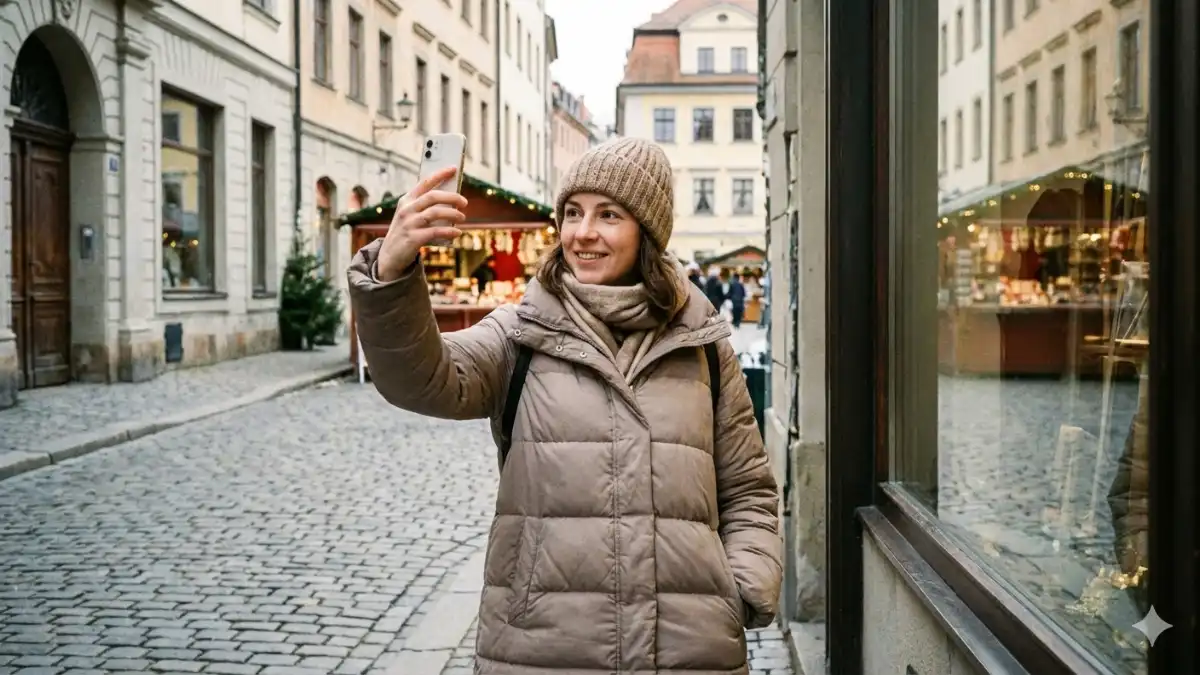
These extra tips for solo women travelers in Europe focus on small, practical decisions that reduce friction and help you move through each day with more calm. This isn’t about worst-case planning; it’s about choosing lodging, timing, and routines that let you enjoy your trip without second-guessing every step.
The general principles of solo travel still apply, from itinerary pacing to budgeting and logistics. This guide layers on the specific filters, boundaries, and night-plan strategies that make the difference when you’re navigating cities, transport, and social situations alone. Your Europe trip planner stays the same; these tweaks make it smoother.
If you want the broader foundation for solo planning, the tips for traveling solo in Europe cover route building, pacing, and first-timer logistics.
Table of Contents
Choose bases and arrival times that feel easy
Arrival timing and your first-night setup set the tone for the entire leg of your trip. Getting it right means you start calm, oriented, and ready to explore.
Prefer daytime arrivals when possible
Landing or arriving by train between 9 a.m. and 4 p.m. gives you daylight to navigate, open tourism offices, and staffed accommodations. Evening and night arrivals compress everything: unfamiliar streets, closed shops, heavier luggage in dim light, and fewer people around to ask for help.
When daytime isn’t possible, pick a well-connected transport hub and pre-book a direct transfer or short taxi ride. Don’t leave night-arrival logistics to chance.
Keep the first night extra simple
Book somewhere close to your arrival station or airport with 24-hour check-in, a staffed front desk, and a neighbourhood you’ve already mapped. The first night is for sleeping and settling, not for exploring the coolest district across town.
Keep your Europe trip itinerary tips practical: if you’re chaining multiple cities, front-load the tricky arrivals early in your trip when your energy is higher, and save familiar transport modes for later legs.
Lodging filters that matter more when you’re solo
Solo accommodation decisions go beyond price and location. A few specific filters directly affect how secure and comfortable you’ll feel each night.
Location and late-night walkability
Check the route from the nearest metro or bus stop to your door using street view, ideally at the time you expect to return each evening. Look for lit paths, mixed-use streets with cafés or shops, and pedestrian activity after dark.
Avoid isolated pockets, dead-end alleys, parks you’d need to cut through, or districts flagged in multiple recent reviews as uncomfortable at night. Women Travelers safety guidance from the U.S. State Department offers country-specific context if you’re unfamiliar with a region.
Front desk / access control / entry setup
Prefer properties with:
- 24-hour staffed reception or a secure self-check-in with video intercom
- Key-card building access or a buzzer system, not just a standalone door lock
- Elevator access to upper floors (especially if you’re arriving tired or alone late)
Hostels can work well if they offer female-only dorms with lockers and a staffed desk during evening hours. Airbnb-style apartments are fine if entry is straightforward, the host is responsive, and the building feels residential and lived-in, not empty.
Room strategy (keys, elevator, door routine)
Once you check in:
- Test your room lock, peephole, and any interior chain or bolt
- Know which floor your room is on and the nearest exit stairwell
- Keep your room key separate from any luggage tag that shows your accommodation name
If your room feels off (broken lock, ground-floor window that doesn’t secure, aggressive noise from next door), ask to switch immediately. Don’t wait.
Boundaries in daily life
Setting boundaries isn’t rude. It’s the fastest way to shut down awkward or unwanted interactions so you can get back to your day.
The “no details” rule
Casual conversations at cafés, on trains, or in hostel common areas are normal. But you don’t owe anyone your itinerary, lodging name, solo status, or travel timeline.
Safe responses include:
- “I’m meeting friends later.”
- “I’m still deciding my next stop.”
- “I’m on a tight schedule today.”
Keep it vague, keep it light, and don’t feel pressured to fill silence with personal information.
In the EU, dialing 112 connects you to emergency services in any country if a situation escalates and you need immediate help.
A short exit script for uncomfortable situations
If a conversation or setting turns uncomfortable, end it quickly:
- “I need to make a call.”
- “I’m late, have to go.”
- Stand, move toward a staffed counter, or step into a busy area.
You don’t need to justify, explain, or soften the exit. Polite and firm beats apologetic and slow.
When to change plans without guilt
If a day trip, evening activity, or walking route stops feeling right, change it. Skipping a sight or cutting a night walk short isn’t failure; it’s smart adjustment.
Your trip is yours. Optimise for ease and enjoyment, not for ticking every box on a list someone else made.
Night plans
You can have great dinners, see local nightlife, and enjoy evening hours. It just takes a little structure.
Dinner strategy
Book or arrive for dinner between 7 and 8:30 p.m. in most European cities; you’ll have staff presence, other diners, and a calm rhythm. Sit where you can see the door and the room. Bar seating, window tables, or corners near the host stand all work.
Bring a book, phone, or notebook. Looking occupied discourages unwanted attention and makes solo dining feel intentional, not awkward.
Transport strategy
Check the last metro or bus departure before you go out. Aim to leave your dinner or event with at least 20 minutes of buffer.
If you’re taking a ride-share or taxi after dark:
- Verify the licence plate and driver name in the app before getting in
- Sit in the back seat
- Share your ride status with a trusted contact if it’s a long trip or unfamiliar route
Walking at night is fine in well-lit, busy areas. If the route feels empty or poorly lit, spend the few euros on a ride.
If you drink: keep it practical
If you choose to drink, pace yourself, eat first, and keep your glass in sight. Ordering wine or beer with dinner is normal across Europe; overdrinking alone in an unfamiliar city just makes navigation, decisions, and safety harder.
Stick to venues where you see other solo diners or mixed groups, and leave while you still feel sharp and aware.
Phone and location habits that reduce stress
Your phone is your map, translator, and backup contact. A few offline habits make it more useful when connectivity drops or battery runs low.
Share your route selectively
Pick one person at home who gets your rough itinerary: cities, dates, lodging names. You don’t need to check in hourly, but someone should know where you are each week.
Use a shared note, location-sharing app (set to trusted contacts only), or a simple text update every few days.
Keep essential info offline
Download offline maps for each city in Google Maps or Maps.me before you arrive. Screenshot your lodging address, check-in instructions, and confirmation codes.
Save a copy of your passport, insurance policy, and emergency contact numbers. Your travel documents for Europe should include backups stored in your email and phone.
If your phone dies or you lose signal, you can still navigate and prove your bookings.
What to do if something feels off
Gut feelings exist for a reason. If a situation, person, or place feels wrong, act on it immediately.
Trust the signal and switch to a simpler plan
You don’t need proof or a clear reason. If a street feels too quiet, a conversation feels pushy, or a lodging gives you a bad vibe at check-in, make a change.
Move to a busier area, skip the activity, or check into a different property. The cost of changing plans is always lower than ignoring discomfort.
Move to a staffed place and reassess
If you feel unsafe or unsure, walk into the nearest hotel lobby, staffed café, train station, or tourist office. Sit down, get your bearings, and decide your next step from a calm, visible spot.
Staff at hotels and transport hubs are used to helping travelers. You can ask to call a taxi, verify an address, or just sit until you feel ready to move.
Quick wrap: women-specific pre-trip checks
Before you leave, run through a few quick checks that smooth out common friction points:
| Check | Action |
|---|---|
| Lodging | Confirm 24-hour access or check-in window; verify walkability from transport |
| Arrivals | Aim for daytime; pre-book first-night transfer if arriving late |
| Offline maps | Download city maps and save lodging addresses as screenshots |
| Contacts | Share rough itinerary with one trusted person |
| Boundaries | Rehearse one polite exit line; decide what details you won’t share |
| Documents | Save digital backups of passport, insurance, emergency numbers |
Your before you leave checklist for Europe covers broader pre-trip admin. These tweaks add the solo-female layer without overcomplicating your prep.
If you’re still refining what to carry, a hands-free day bag and mobile-friendly wardrobe make daily movement easier; the Europe packing list breaks down the practical essentials.
These extra tips for solo women travelers in Europe aren’t about fear or restriction. They’re about building in small buffers, clear boundaries, and smart defaults so you spend less energy on logistics and more on actually enjoying your trip.
