

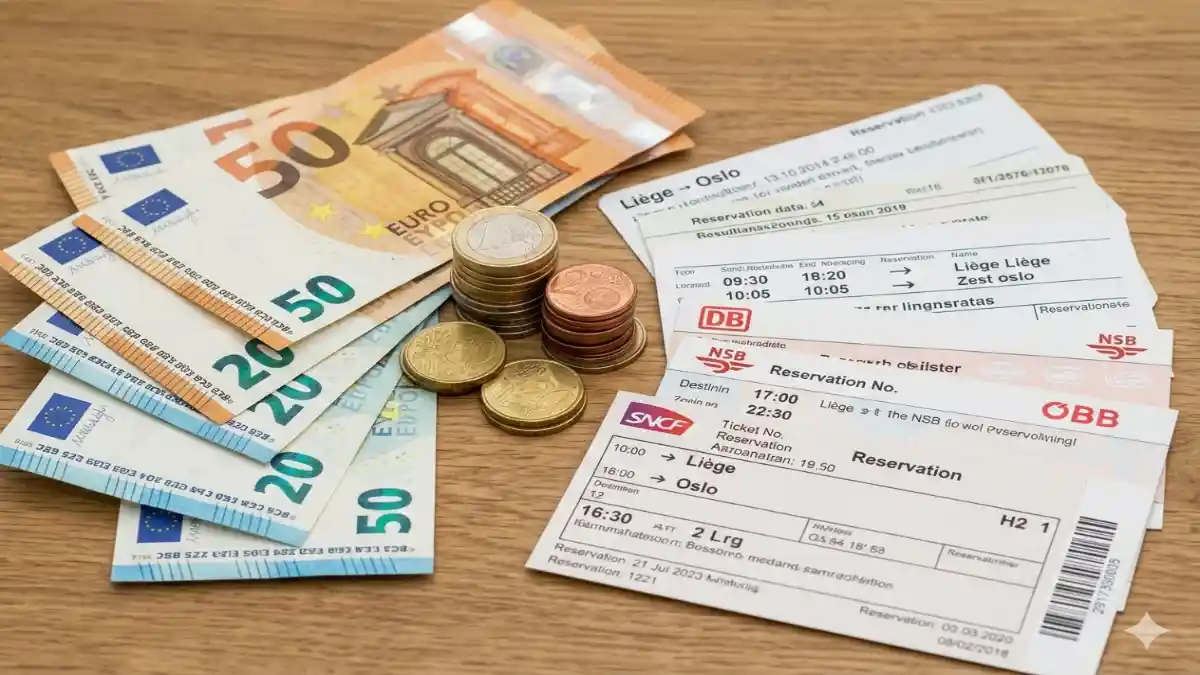
European numbers and mix-ups catch travelers at the worst moments: booking the wrong date, paying twice what you expected, or missing a train because you read the time wrong. These aren’t abstract cultural differences; they’re formatting traps that cause real friction, wasted money, and avoidable stress in your Europe trip planner, and most can be prevented with a five-second double-check.
Table of Contents
European numbers and mix-ups: the fast fixes that prevent mistakes
Most European number confusion happens at three points: booking (dates and times written differently), paying (decimal symbols flip roles), and moving (distances and temperatures using unfamiliar units). The good news is that once you know where the traps are, the fixes are simple pattern recognition.
Think of this as your cross-reference layer. You already check passport expiry and flight times; now add a quick scan for date order, decimal symbols, and 24-hour clock formatting before you click “confirm.”
Dates and calendars
Day/Month vs Month/Day (booking and tickets)
Europe writes dates day-first: 03/05/2025 means May 3rd, not March 5th. This reversal causes double-bookings, missed trains, and incorrect hotel check-ins, especially when you’re toggling between U.S.-based booking sites and European rail or bus platforms.
Always look for context clues: a date like 22/04/2025 can only be day/month (there is no 22nd month). When in doubt, spell out the month name or use the ISO 8601 date format (YYYY-MM-DD), which is unambiguous and increasingly common on European transport sites.
Booking confirmations often include both formats or a spelled-out date. Screenshot or save the confirmation email and cross-check the day of the week; that’s your last-line defense against showing up on the wrong day.
“Public holiday” surprises (closures and transport patterns)
European public holidays are country-specific, not continent-wide. A bank holiday in France means nothing in Germany, and regional feast days can shut down entire towns with zero warning if you haven’t checked local calendars.
Grocery stores, museums, and smaller train stations often close or run Sunday schedules on public holidays. If your arrival or departure falls near a holiday, confirm transport frequency and accommodation check-in hours in advance.
The best time to visit Europe varies by region and season, and holiday calendars are one reason why shoulder months can surprise you with closures that wouldn’t happen in peak summer.
Time formats (and why you miss trains)
24-hour time and platform timing
European timetables, tickets, and departure boards use 24-hour time: 14:30 is 2:30 PM, 19:45 is 7:45 PM. There is no AM/PM ambiguity, but if you’re skimming a printed ticket and mentally subtract wrong, you’ll arrive 12 hours late or 12 hours early.
Train and bus platforms post departure times to the minute, and many stations display “real-time” countdowns. If your ticket says 16:42 and the board shows 16:41 with “closing doors,” you’ve missed it.
Set your phone to 24-hour display a week before you leave. The adjustment period is short, and you’ll stop second-guessing every ticket and reservation.
Time zones inside Europe (when it matters)
Most of Western and Central Europe shares one time zone (CET/CEST), but Spain and Portugal are one hour behind, and Greece, Finland, and parts of the Balkans are one hour ahead. Flight and train times are always printed in local departure and arrival time, so a 10:00 departure from Athens and an 11:30 arrival in Rome is only a 2.5-hour flight, not 1.5 hours.
When you’re building a multi-country route, double-check time-zone shifts on travel days. Your phone auto-adjusts, but printed itineraries and screenshot confirmations may not.
Tight connections and early check-ins get especially risky if you forget that crossing from France into Spain “gains” you an hour on the clock but doesn’t change your train departure slot. Europe trip itinerary tips help you build margin into moving days, and time-zone shifts are one reason why.
Currency and decimals
Decimal comma vs decimal point (€, prices, receipts)
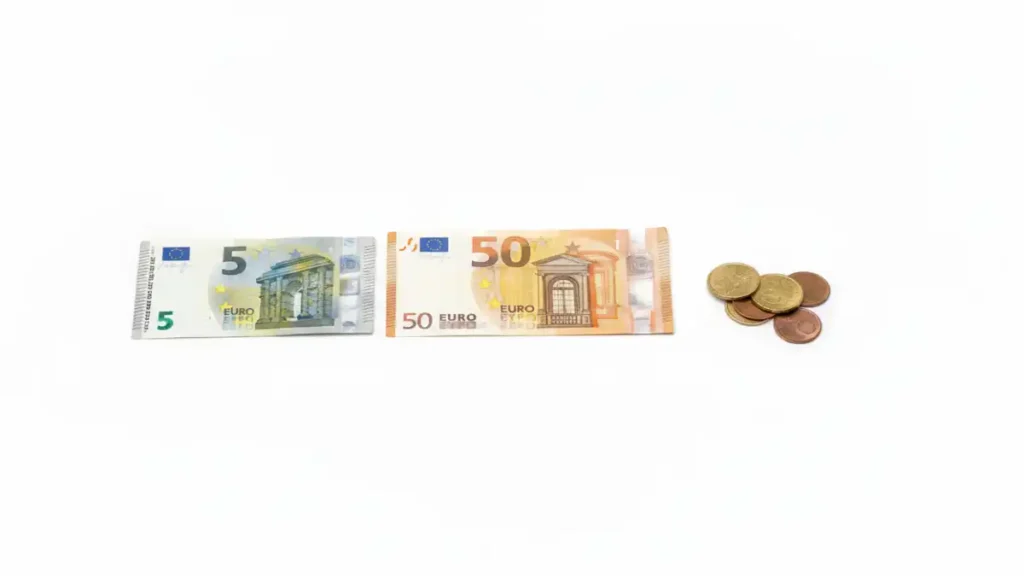
In most of Europe, the comma is the decimal separator: €3,50 means three euros and fifty cents, not three thousand five hundred. The period (or space) is used for thousands: €1.250 or €1 250 means one thousand two hundred fifty euros.
This flip causes two common errors: mistaking a cheap item for an expensive one (or vice versa), and entering the wrong amount when paying by card or approving a terminal charge.
On payment terminals and ATM screens, look for the currency symbol and count digits. If you’re withdrawing cash and the machine offers €200,00 or €200.00, both mean two hundred euros; context and your bank’s interface tell you which.
Thousands separators (1.000 vs 1,000)
A hotel bill showing €1.250,00 means €1,250 (one thousand two hundred fifty euros), not €1.25. Receipts, invoices, and booking confirmations in Germany, Italy, Spain, and France follow this pattern.
When comparing prices across sites, convert ambiguous numbers into words in your head or rewrite them on your phone. “One thousand two hundred fifty” is slower but foolproof.
“Service included” and extra charges (how to read the bill)
“Service compris” or “servizio incluso” means tip is already in the total. Look for line items labeled “coperto” (Italy), “Gedeck” (Germany), or “couvert” (France); these are cover charges, not tips, and they’re legal and standard.
The final total is usually bold or at the bottom, often labeled “totale,” “gesamt,” or “total TTC” (tax included). If the bill shows €42,50 and you hand over a €50 note expecting €7.50 back, recount using the comma as your decimal.
Card terminals sometimes ask “add tip?” even when service is included. You can decline or add a small amount (5–10 %), but you’re not undertipping if you pay the printed total.
Measurements that affect planning
The metric system governs all signage, maps, weather, and transport in Europe, and even small conversion errors compound into missed expectations on long travel days or uncomfortable packing choices.
Kilometers vs miles
100 km is about 62 miles. A “90 km drive” sounds short if you’re thinking miles (90 miles ≈ 145 km), but on narrow rural roads or in traffic, 90 km can still take 90 minutes or more.
Google Maps defaults to kilometers in Europe; if you’re used to miles, mentally halve the number and add a bit (e.g., 120 km ≈ 75 miles). Train and bus tickets show distance in km, and fuel is sold by the liter (1 gallon ≈ 3.8 liters).
When comparing day-trip options, use time rather than distance. A 50 km coastal route with switchbacks takes longer than a 100 km highway stretch.
Celsius vs Fahrenheit
| Celsius | Fahrenheit | What to expect |
|---|---|---|
| 0 °C | 32 °F | Freezing, ice possible |
| 10 °C | 50 °F | Cool, jacket needed |
| 20 °C | 68 °F | Comfortable, light layers |
| 30 °C | 86 °F | Warm to hot, shorts OK |
Weather apps and hotel climate info use Celsius. A forecast of 15 °C sounds cold if you’re expecting 60 °F, but it’s actually mild (59 °F) and perfect for walking with a sweater.
If the forecast shows 8 °C at night, pack an extra layer. If it climbs to 28 °C midday, bring water and sunscreen. Your Europe packing list should flex with the forecast, and reading Celsius correctly prevents both overpacking and underpacking.
Language traps that look familiar (but aren’t)
False friends in signs and menus
Words that look like English but mean something else cause harmless confusion (ordering the wrong dish) or serious mistakes (misreading a warning or restriction).
- “Gift” (German) = poison (not present).
- “Preservativo” (Italian) = condom (not preservative).
- “Eventualmente” (Spanish/Italian) = possibly (not eventually).
- “Smoking” (French, on signs) = tuxedo rental, not cigarette area.
- “Fast” (German) = almost (not quick).
On train platforms and museum signs, assume nothing. If a sign looks important but uses a word you half-recognize, check a translation app or ask staff.
“Ticket validation” wording
Many European transit systems require you to “validate” or “stamp” your ticket before boarding, even if you bought it online or at a kiosk. Validation machines are small yellow or green boxes near platform entrances or on trams and buses.
The word varies: “oblitérer” (France), “convalidare” (Italy), “entwerten” (Germany). The consequence is the same: inspectors treat unvalidated tickets as fare evasion, and fines start at €50.
If your ticket is print-at-home or mobile QR, read the fine print. Some require no validation; others tell you to scan at a gate or hold near an NFC reader. When in doubt, validate.
Practical “don’t get burned” checklist
Before you book: date/time/decimal double-check
- Confirm date format: Is 05/03/2025 May 3rd (Europe) or March 5th (U.S.)?
- Convert 24-hour times: Does 22:15 match your mental picture of “evening”?
- Check time zones: Is your flight arrival local time at destination?
- Verify price decimals: Is €12,50 twelve euros fifty or twelve thousand five hundred?
Take an extra ten seconds on the confirmation screen. Rebooking costs more than double-checking.
Before you pay: currency/decimal sanity check
- Count digits and symbols: €1.200,00 is one thousand two hundred, not one euro twenty.
- Look for “total” or “totale” on the bill; ignore subtotals and line items when calculating tip.
- On card terminals, confirm the amount before you tap or insert; DCC (dynamic currency conversion) can inflate totals by 5–10 %.
- If the number feels wrong, ask. Staff are used to confused tourists and would rather clarify than dispute a chargeback.
Before you board: time/platform/ticket check
- Reconfirm departure time in 24-hour format and match it to the departure board.
- Check platform/track (“binario,” “voie,” “gleis”) on both your ticket and the live board; last-minute changes happen.
- Validate your ticket if required; look for small machines near gates or onboard.
- Screenshot your ticket and booking reference; phone batteries die, and paper printouts smudge.
A final cross-check routine cuts missed connections and boarding stress in half, especially on multi-leg days. Your before you leave checklist for Europe should include verifying date formats on all printed tickets and confirming that your phone displays 24-hour time.
If you’re carrying travel documents for Europe, double-check expiry dates using day/month order, and if you’re navigating ETIAS Europe requirements, remember that application dates and travel dates follow the same European day-first convention.
