

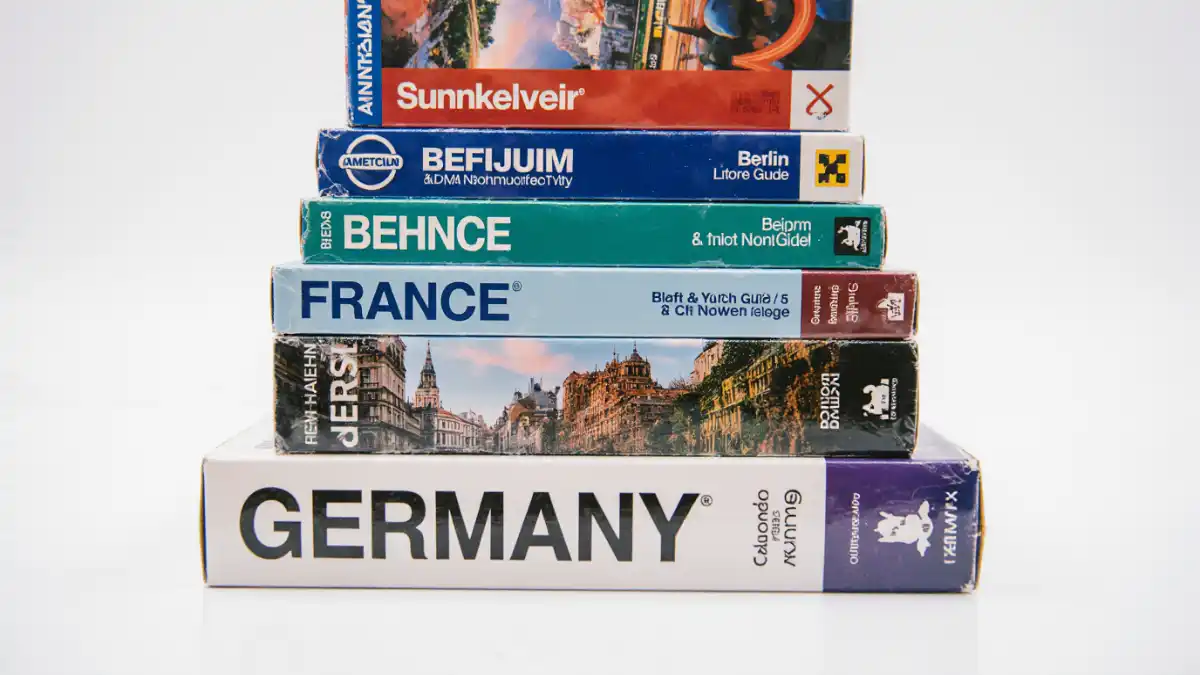
When shopping for the best Europe guidebooks compared side by side, you’re not choosing the “best” book overall, you’re choosing the one that matches how you actually plan and travel. The right guidebook depends on whether you need a structured multi-country plan, deep neighborhood walks in one city, or quick highlights you can verify online.
Most travelers buy whichever book ranks highest on Amazon, then discover halfway through planning that it covers 30 cities in 400 pages or lacks opening hours entirely. A guidebook is a planning tool first and a travel companion second. Your job is to match its structure, depth, and update rhythm to your Europe trip planner approach, not the other way around.

Table of Contents
What Europe guidebooks do better than the internet
Guidebooks excel at giving you a curated, tested snapshot that doesn’t require 47 browser tabs. They fail when things change faster than print cycles allow.
Structured planning and reality checks
A guidebook forces you to see the full picture: distance between sights, realistic daily itineraries, and neighborhoods you’d never find in a Google search. It’s harder to accidentally plan six museums in one afternoon when a book lays out walking times and closing days on the same page.
This structure helps beginners avoid common mistakes like underestimating travel time between cities or overloading a single day. You get a pre-built logic you can adapt rather than building from scratch.
On-the-ground logic
Guidebooks map out which metro stop actually gets you closest to a sight, which streets connect two areas, and how long a walk really takes with cobblestones and crowds. Online maps show distance but not the experience of moving through a place.
Authors walk routes repeatedly and note details that algorithms miss: which side of the river has shade, which plaza gets loud at night, which ticket booth has the shorter line.
Where guidebooks can be outdated
Print cycles mean information can be six months to two years old by the time you read it. Prices drift, restaurants close, museums change hours, and booking systems move online.
Always verify critical logistics before you rely on them:
- Opening hours and seasonal closures (check official websites)
- Ticket prices and advance-booking requirements
- Transit routes and schedules (use live apps closer to departure)
- Restaurant operating status (a quick Google search or Instagram check)
Treat the guidebook as your shortlist generator, not your final source of truth.
The comparison framework
Five criteria let you eliminate 80% of guidebook options quickly. Match these to your trip, and you’ll know which series or edition to buy.
Update frequency and edition clarity
Check the publication date and how often the series refreshes that region. A 2019 edition of a popular city guide is likely outdated for pricing and booking logistics. Series that update annually (or every two years) stay more reliable.
Look for edition numbers and year stamps on the cover or copyright page. Avoid books with vague “revised” labels and no date.
Depth vs breadth
Country guides cover multiple cities in less detail, ideal for multi-stop trips where you need quick context everywhere. City guides dedicate 200–400 pages to one place, offering neighborhood walks, hidden spots, and day-trip options.
For example, Lonely Planet publishes both shallow regional overviews and deep single-city editions. If you’re spending four days in one city, buy the city guide. If you’re moving every two days across five countries, a regional guide keeps your bag lighter.
Map quality and walking logic
Flip to the map section before you buy. Good maps show metro lines, walking routes, and sight clusters with enough detail to orient yourself without a phone. Poor maps are decorative and force you to rely entirely on Google.
Check whether walking routes are marked, whether neighborhoods are labeled clearly, and whether the scale makes sense for on-foot navigation.
Practical detail level
Does the book list opening days, ticket prices, advance-booking links, and the nearest metro stop for each sight? Or does it give you a paragraph of history and leave logistics to your own research?
Budget and first-time travelers need books that include transit instructions, rough costs, and reservation tips. Experienced travelers might prefer lighter narrative guides and do the logistics research separately.
Style match
Some series (like Rick Steves) focus on opinionated highlights and efficient itineraries. Others (like Rough Guides) offer more cultural background, alternative perspectives, and slower-paced exploration ideas.
If you want to see the top 20 sights in seven days, pick a highlights-focused guide. If you want to understand a place and explore beyond the main attractions, choose a narrative-driven series.
Match a guidebook style to your trip style
Your travel rhythm determines which book becomes useful versus baggage.
First-timers who want a clear plan
Look for series that offer sample itineraries, clear “don’t miss” lists, and step-by-step logistics. Books with daily plans, museum skip-the-line tips, and beginner-friendly maps reduce decision fatigue.
Rick Steves and DK Eyewitness guides work well here. They assume you’ve never navigated European transit or booked a museum ticket in advance.
Slow travelers who want depth
Choose city-specific guides or regional books that include essays, neighborhood profiles, and off-the-beaten-path suggestions. You need enough content to fill a week in one place without repeating the same three sights.
Rough Guides and Lonely Planet city editions offer more narrative and context. They’re better for travelers who plan to spend mornings in cafes and afternoons wandering one district.
Budget-focused travelers who need price realism
Pick books that list hostel options, free sight days, cheap-eats neighborhoods, and transit-pass breakdowns. Avoid aspirational guides that recommend $30 lunches and assume you’ll taxi everywhere.
Check sample pages before buying. If restaurant listings start at €25 per entree and lodging examples are all boutique hotels, the book isn’t built for budget travel.
One-city trips vs multi-country routes
Single-city trips demand depth: buy the dedicated city guide. Multi-country trips need breadth and portability: buy a regional overview or download chapters individually if the publisher offers modular formats.
Carrying a 500-page Western Europe guide when you’re only visiting Paris and Amsterdam wastes space. Your Europe packing list shouldn’t include books you’ll use for 40 pages.
How to use guidebooks without carrying too much
Guidebooks are heavy and bulky. The smart approach is to extract what you need before you leave and leave the physical book at home or in your accommodation.
“Plan with the book, travel with highlights”
Use the guidebook during the planning phase to build your shortlist of sights, neighborhoods, and day trips. Write down or screenshot the key pages: maps, itineraries, transit tips, and sight details.
Once your plan is set, you don’t need the full book. A folded map, a notes app, and a few photos of important pages cover 90% of on-the-ground needs.
Notes, screenshots, and offline access
Take photos of maps, itinerary pages, and practical details (hours, addresses, transit directions). Save them in a dedicated album on your phone for offline access.
Type key info into a notes app or Google Doc: daily plans, booking confirmations, and backup options if your first choice is closed. This gives you a lightweight, searchable reference that doesn’t add weight to your bag.
Some publishers offer digital editions or downloadable chapters. If you’re visiting five cities, buy only those chapters instead of the full regional book.
Combine guidebooks with your research workflow
Guidebooks start the process, but they shouldn’t finish it. Use them to build a foundation, then layer in current logistics and personal preferences.
Use guidebooks to shortlist, then verify logistics with official sources
Let the book surface interesting sights, neighborhoods, and day trips you wouldn’t have found in a generic search. Write down the shortlist, then visit official websites to confirm hours, pricing, and booking requirements.
This two-step method gives you curated ideas without relying on outdated details. The guidebook narrows your search, and live sources keep your plan accurate. For a deeper dive into structuring this process, see how to research a Europe trip.
Turn highlights into a realistic route
Once you have a list of sights and cities, map them to see what order makes sense geographically. Guidebooks often present cities alphabetically, not logically for travel.
Build your route based on proximity, transport connections, and how much time each stop deserves. Use your shortlist to create a day-by-day plan that accounts for travel time, rest days, and flexibility. More on shaping that structure can be found in Europe trip itinerary tips.
Quick chooser table
Your pace, budget, depth, format, and flexibility needs
| Your priority | Best guidebook style |
|---|---|
| Fast highlights, first trip | Rick Steves, DK Eyewitness (structured itineraries, clear maps) |
| Deep cultural context, slow pace | Rough Guides, Lonely Planet city editions (narrative, essays, neighborhood depth) |
| Budget travel, hostels, cheap eats | Lonely Planet budget sections, hostel-focused guides |
| One city, 5+ days | Dedicated city guide (any major series), not regional overview |
| Multi-country, 2 weeks | Regional overview (lighter, broader), or digital chapters only |
| Offline access, light pack | Digital edition or screenshot key pages, leave physical book behind |
Final 5 checks before you rely on any guidebook
Even the best guidebook needs a reality check before you commit to its recommendations. Run these five checks on anything critical to your plans.
Opening hours, booking rules, seasonal closures, pricing drift, transit changes
- Opening hours: Museums and sights change schedules seasonally. Check official websites a week before your visit.
- Booking rules: Many popular sights now require advance tickets that didn’t a few years ago. Verify current reservation systems.
- Seasonal closures: Churches, palaces, and regional attractions close for holidays, renovations, or off-season. Confirm before you plan a day around one sight.
- Pricing drift: Expect ticket prices to be 10–20% higher than the book lists, especially if the edition is over a year old.
- Transit changes: Metro lines extend, bus routes shift, and ticketing apps replace paper passes. Use live transit apps for current routes and fares.
Treat guidebook info as a strong starting point, not gospel. Cross-check anything that would ruin your day if it’s wrong.
