

Greener travel in Europe isn’t about perfection or sacrifice. It’s about choosing the handful of actions that genuinely reduce your footprint without turning your trip into a burden or a moral exercise. Small, deliberate choices around how you move, where you stay, what you eat, and how you behave in crowded places add up faster than you’d think, and most cost you nothing in comfort or budget.
The goal here is simple: identify the high-impact levers, skip the performative gestures, and enjoy a trip that leaves places a little better than you found them.
Table of Contents
Greener travel in Europe: what actually moves the needle
Focus on the choices that produce the largest environmental benefit for the smallest change in your experience. Transport mode, trip structure, and behavior in crowded destinations matter far more than reusing a towel or skipping a straw.
Most travellers spend energy on tiny gestures while missing the big ones. The difference between a flight-heavy trip and a train-based route can dwarf a month’s worth of plastic-bottle savings. Similarly, choosing three bases instead of seven cuts emissions, reduces stress, and gives you time to actually experience a place instead of racing through it.
Treat your Europe trip planner as the foundation. If the route is smart, every choice downstream gets easier.
Start with the biggest lever
Design your itinerary to minimize unnecessary movement. Fewer bases, fewer transfers, and smarter clustering cut your transport emissions by half or more compared to a scattershot route, and they save you time, money, and logistical headaches.
A trip with three or four bases instead of eight will generate less carbon, create less lodging churn, and let you settle into rhythms that benefit local neighborhoods. You’ll eat at the corner bakery twice, recognize faces, and stop treating every city like a checklist.
The European Commission’s sustainable tourism framework encourages longer, deeper visits over rapid multi-city circuits. It’s not ideology; it’s infrastructure relief and quality of life for both travellers and residents.
Fewer bases = fewer transfers = lower impact
Every time you pack up and move, you trigger transport, new lodging turnover, laundry cycles, heating or cooling a new room, and often a short-haul flight or long drive.
Reduce bases and your footprint drops automatically. A two-week trip with three stops instead of six halves your transfer emissions and cuts lodging energy use significantly.
Use Europe trip itinerary tips to cluster destinations by geography and transport links. If three cities sit on one rail corridor, stay in each for three nights instead of bouncing daily.
Longer stays in fewer places
Staying four nights instead of one spreads tourist spending more evenly, reduces peak-hour crowding, and lets you discover shops and restaurants beyond the arrival-day radius.
Locals benefit when you’re not competing for the same breakfast spot at 9 a.m. with a hundred other just-arrived visitors. You also waste less food, generate less packaging, and support businesses that serve residents year-round, not just tour groups.
Longer stays turn you from a transient into a temporary neighbor. That shift in behavior compounds across a season.
Transport choices
Transport is your single largest carbon contributor on most Europe trips. Cut unnecessary flights, favour ground options when time and comfort allow, and you’ll reduce emissions by 50–70% without adding hardship.
Choose ground transport when it’s sensible
Trains, buses, and ferries produce a fraction of the emissions of short-haul flights, often deliver you to city centers, and eliminate airport queues and transfer time.
When ground makes sense:
- Journey under 4–5 hours by train
- Direct daytime routes on comfortable rolling stock
- City-center to city-center convenience beats flying + transfers
When flying is reasonable:
- Routes over 6–7 hours with no direct rail option
- Budget or time constraints make ground impractical
- Overnight options don’t exist or don’t suit your schedule
Treat the decision as a trade-off table, not a moral test. Paris to Amsterdam by train is faster and greener. Lisbon to Kraków is not.
If you fly: reduce extra hops and unnecessary positioning flights
One long flight produces less total carbon than three short ones. Avoid routing that forces you to backtrack or adds a positioning hop just to catch a cheap fare.
Book open-jaw tickets (fly into one city, out of another) to eliminate the return leg to your arrival point. Pair this with a linear or loop route on the ground.
Skip the budget-carrier game of flying to a secondary airport 90 km away, then taking a bus back to the city you wanted. The combined emissions and time often exceed a direct train.
Local transit and walking patterns that work
Use metro, tram, and bus networks for daily movement. A week of metro rides in any European city produces negligible emissions compared to a single short flight.
Walking 15,000–20,000 steps per day is normal for most Europe trips. Plan lodging within 20 minutes’ walk or one direct transit line from your main activity zone.
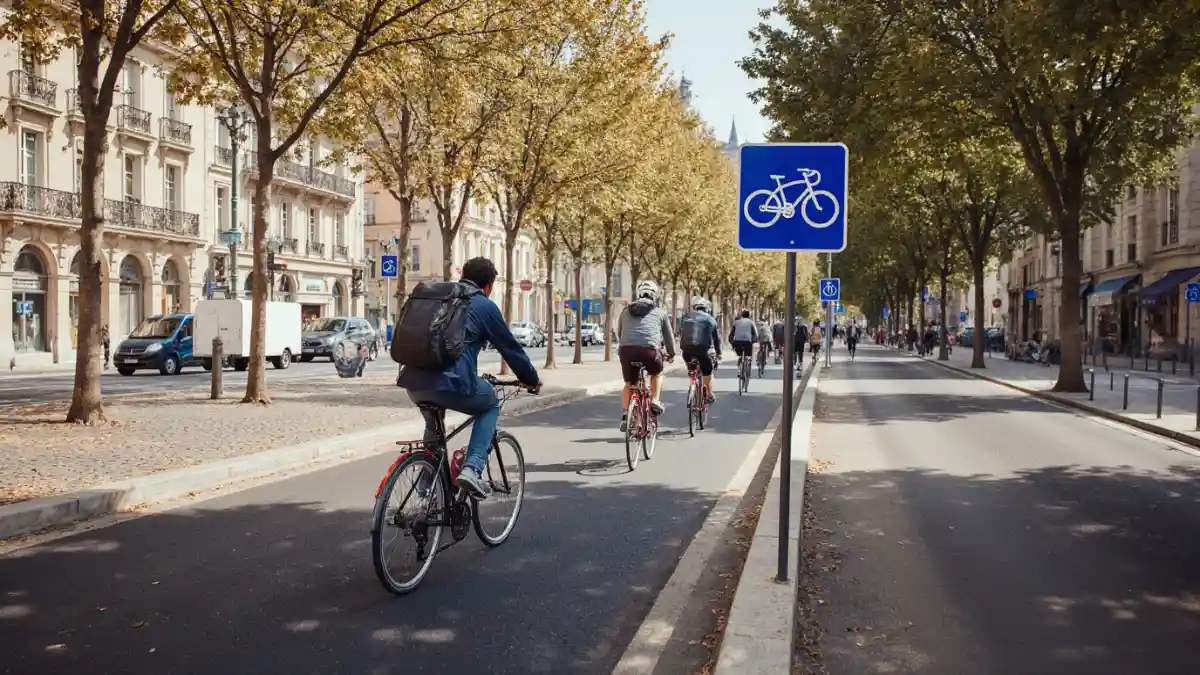
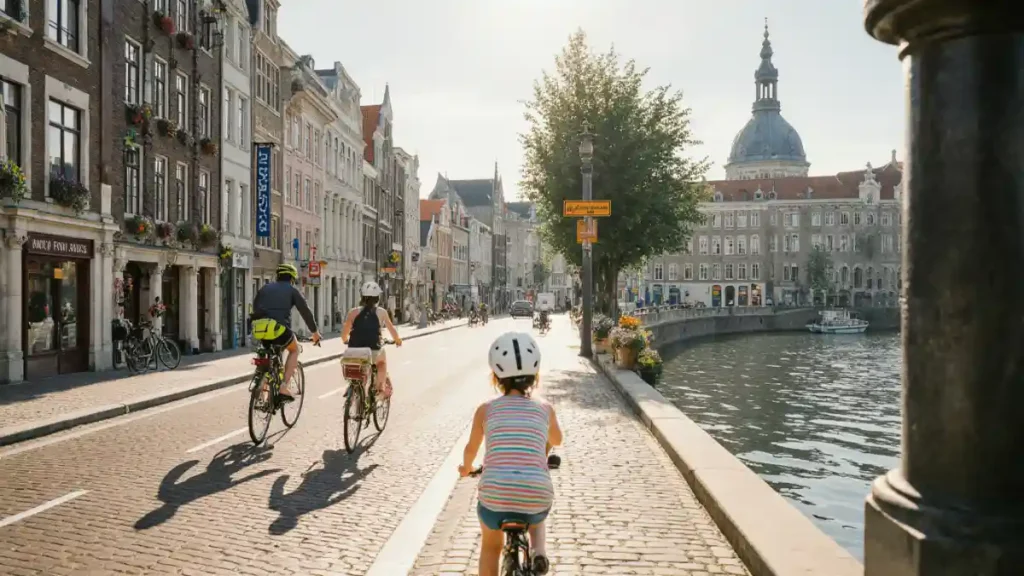
Rent bikes where infrastructure supports it (Copenhagen, Amsterdam, Berlin, Lyon). Skip car rentals in cities; reserve them for rural routes where transit doesn’t reach.
Lodging habits that help
Small lodging choices add up across millions of room-nights. You don’t need to suffer; you just need to skip waste that serves no purpose.
Towels/linen requests and reasonable housekeeping choices
Hang towels to reuse. Most hotels will skip laundry if you signal intent, cutting water, detergent, and energy use.
Decline daily housekeeping if you’re staying multiple nights. Sheets don’t need changing every 24 hours, and skipping service reduces chemical use, waste hauling, and labor churn.
If you want fresh towels or trash removal mid-stay, request it. The goal is to avoid automatic daily cycles that exist out of habit, not need.
Heating/AC habits and simple “leave no waste” routines
Turn off heating or AC when you leave the room. Most European lodging still relies on individual control, and ghost-cooling an empty room for eight hours wastes energy for zero benefit.
Open or close windows based on season. In shoulder months, natural ventilation often beats mechanical climate control.
Before checkout:
- Dispose of trash properly (separate recycling if bins are marked)
- Turn off lights, close windows, shut down AC/heat
- Don’t leave half-used toiletries; take them or use them
These actions take 60 seconds and prevent waste from being discarded or re-cleaned unnecessarily.
Food and waste
Food and single-use packaging represent manageable, high-visibility waste streams. A few lightweight habits cut your contribution significantly without adding hassle.
The concept of sustainable tourism includes reducing resource consumption and waste while supporting local economies. Food and drink choices are among the easiest levers to pull.
Carry a re-usable bottle (where it makes sense) and refill strategy
Tap water is safe across most of Western and Northern Europe. Carry a 500–750 ml bottle and refill at lodging, fountains, cafés, and transit stations.
Where refills work well:
- Italy (public fountains everywhere)
- Germany, Austria, Switzerland (excellent tap quality)
- Scandinavia, Netherlands, UK
Where bottled makes sense:
- Parts of Southern and Eastern Europe with inconsistent tap quality
- Rural areas without reliable public fountains
- Personal taste or health preferences
A single reusable bottle saves 10–15 plastic purchases per week. Pack a collapsible or lightweight model if space is tight.
Eat local, seasonal when it’s easy
Local, seasonal food travels less, supports regional farms, and usually tastes better. You don’t need to research provenance for every bite; just default to what’s grown nearby.
Simple cues:
- Markets over supermarkets
- Regional dishes over imported ingredients
- Produce that’s abundant and cheap (it’s in season)
Eating seasonally in Italy in August means tomatoes, zucchini, peaches. In Sweden in October, root vegetables and berries. Let the menu and market guide you.
Reduce single-use: one small kit that earns its place
Pack a lightweight kit to sidestep disposable cutlery, cups, and containers when you picnic, grab takeaway, or snack on transit.
What works:
- Collapsible cup or small thermos
- Spork or compact utensil set
- Cloth napkin or bandana
- Small zip bag for snacks
This kit weighs under 200 grams and eliminates dozens of single-use items over two weeks. Build it into your Europe packing list as a standard module, not an afterthought.
Over-tourism and respect
Your behavior in popular destinations directly affects residents, infrastructure, and the experience of everyone around you. Small adjustments reduce crowding pressure and make tourism more tolerable for locals.
Time-shifting (early/late) to reduce pressure
Visit major sites at opening or late afternoon. The two-hour window after opening and before closing sees half the foot traffic of midday.
Early mornings also offer better light, cooler temperatures, and quieter streets. You’ll move faster, photograph better, and avoid contributing to bottleneck crowds.
Plan around best time to visit Europe seasonally, but also shift daily rhythms within any season. Shoulder and off-peak months compound the benefit.
Choose one “secondary” neighborhood/spot per base
For every famous district, pick one lesser-known area to explore. Spread your spending, foot traffic, and attention beyond the highlights.
Examples:
| Main zone | Secondary pick |
|---|---|
| Venice: San Marco | Cannaregio or Giudecca |
| Barcelona: Gothic Quarter | Gràcia or Poble Sec |
| Prague: Old Town | Vinohrady or Karlín |
Secondary areas host real bakeries, hardware stores, and parks used by residents. Your presence there matters less, and you’ll see how the city actually functions.
Keep public spaces usable
Don’t block sidewalks, doorways, or transit exits for photos. Step aside, shoot, and move.
Keep voice levels conversational in residential areas, early mornings, and late evenings. Tour groups shouting at 7 a.m. under apartment windows generate legitimate resentment.
Respect queues, bike lanes, and pedestrian flow. If locals are navigating around you, you’re in the way.
Souvenirs and shopping
Souvenirs generate waste, support extractive supply chains, or sit unused after one trip. Buy less, choose local, and prioritize quality over quantity.
Buy fewer, better, and from real local makers
Look for items made in the region, sold by the person who made them or a shop that curates local production.
Quick authenticity cues:
- Sold at a market stall or independent shop, not a chain
- Maker’s name or workshop visible
- Materials and techniques tied to the region (ceramics in Portugal, textiles in Hungary, leather in Italy)
Avoid mass-produced “souvenir” items stamped with city names. They’re often imported, low-quality, and contribute nothing to the local economy.
One well-made item you’ll use beats five fridge magnets that end up in a drawer.
Shipping vs carrying
Shipping consolidates transport and removes weight from your luggage, but adds packaging and often uses air freight for speed.
When to ship:
- Fragile or bulky items (ceramics, glassware, art)
- Purchases that exceed your luggage capacity
- Avoiding overweight baggage fees (financial and emissions trade-off)
When to carry:
- Small, durable goods
- Items under 2–3 kg
- Souvenirs that fit in existing luggage space
If you ship, request consolidated ground or sea freight when time allows. Surface shipping cuts emissions by 80% or more versus air, though it takes weeks instead of days.
Quick wrap: your greener travel checklist
Before you go:
- Design a route with fewer bases and logical ground-transport links
- Research transport options and book direct trains or buses where sensible
- Pack a reusable bottle, utensil kit, and basics from your before you leave checklist for Europe
During your trip:
- Reuse towels and decline daily housekeeping
- Turn off climate control and lights when you leave lodging
- Eat local, shop at markets, carry reusables
- Visit popular sites early or late; explore one secondary area per base
- Walk, use transit, and keep public spaces clear
When you shop:
- Buy fewer, better items from local makers
- Ship fragile or bulky purchases via surface freight when possible
For deeper planning:
- Use how to research a Europe trip to explore local norms, ethical considerations, and sustainability initiatives in each destination
None of these actions require sacrifice. They require only a small shift in default behavior, and together they reduce your footprint by half or more while improving your trip’s quality and your relationship with the places you visit.
