

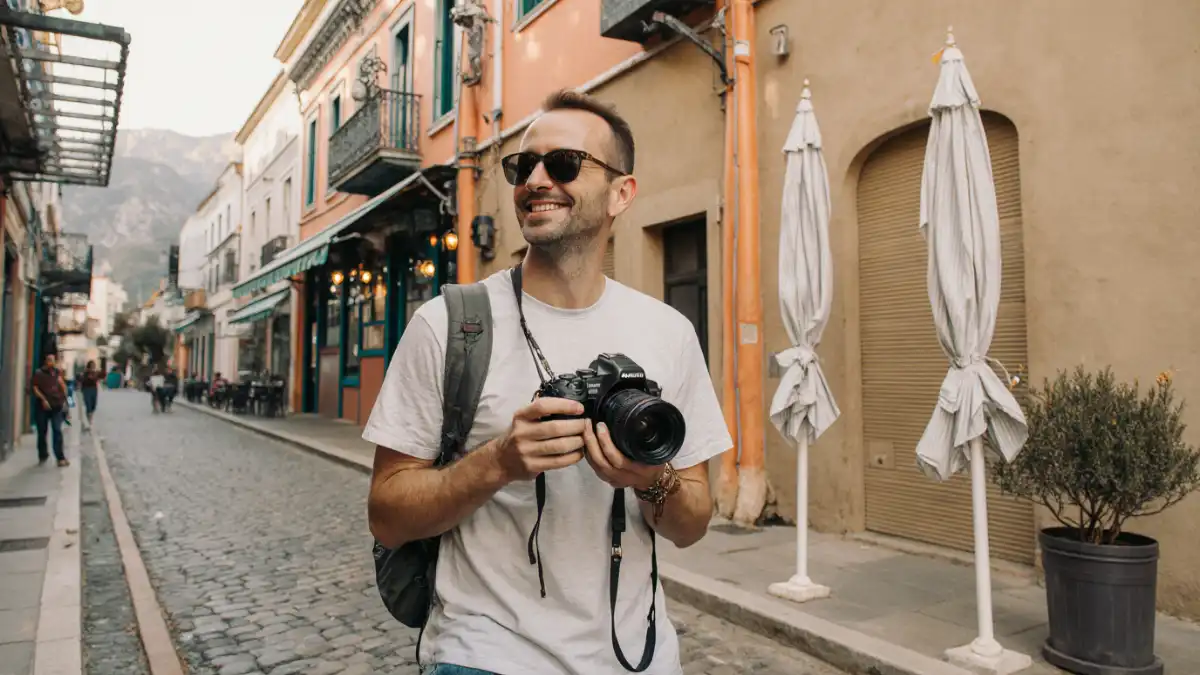
Traveling solo in Europe is not complicated, but it does reward a few adjustments in how you plan, move, and spend your evenings. The tips for traveling solo in Europe below focus on choices that reduce friction and build confidence without sacrificing spontaneity or making safety a heavy burden.
Solo travel simplifies some decisions (you choose everything) and adds new ones (backup plans, eating alone, meeting people when you want to). This guide covers the practical habits that make the trip easier.
Table of Contents
Tips for traveling solo in Europe: what changes
The fundamentals stay the same. You still need a Europe trip planner, lodging, tickets, and a rough route. What changes is your margin for error and your tolerance for discomfort.
You are your only logistical safety net. A late train or a confusing check-in matters more when no one else is there to hold your bag or ask directions while you sit with luggage.
Your rhythm is entirely yours. You eat when hungry, leave when bored, and skip the museum if the park feels better. The freedom is real, but so is the lack of a second opinion.
These adjustments are small: tighter booking on stressful legs, simpler lodging choices, and a few low-profile routines. None require major planning overhauls.
Plan for ease (the solo advantage)
Choose a structure that reduces decision fatigue and limits the number of “moving days.” Solo travel rewards simplicity over ambition.
Pick bases that reduce moving-day fatigue
Stay longer in fewer cities instead of hopping every two nights. Three or four nights per base lets you unpack, orient yourself, and take day trips without constant repacking.
Choose cities with strong day-trip networks (Florence, Prague, Munich, Lyon) so variety comes without hauling luggage. Staying put also cuts accommodation costs and gives you rhythm.
Use Europe trip itinerary tips to map a route that avoids backtracking and clusters destinations logically. Solo travelers gain nothing from tight transit schedules.
| City type | Solo advantage |
|---|---|
| Hub cities (Paris, Berlin, Barcelona) | Day trips, night life, easy transport, social options |
| Mid-size bases (Krakow, Porto, Salzburg) | Walkable, affordable, less overwhelming |
| Villages | Peaceful but limiting; add one as a break, not a base |
Book only the “stress points” early
Reserve your first and last nights, long-distance trains or flights, and any high-season lodging in popular cities. Everything else can wait.
Flexibility lets you extend a city you love or skip one that feels flat. Solo travelers benefit most from adjustable plans because there is no group consensus to manage.
Peak summer (June through August) and Christmas markets (late November, December) require earlier booking. Use best time to visit Europe to align your dates with lower-pressure windows if flexibility matters.
For social opportunities, Meetup groups in many European cities offer low-commitment activities like language exchanges, hikes, or photography walks where you can join without advance registration.
Lodging choices that make solo travel smoother
Your room is your reset point. Pick accommodations that reduce hassle, not just price.
Location > luxury (what location buys you)
Stay within 15 minutes’ walk of the old town, main station, or a metro stop. Central lodging shortens every errand and keeps late evenings safer and simpler.
Proximity matters more solo because you cannot split a taxi or rely on someone else to navigate. A cheap room 40 minutes out drains time and energy every day.
Budget for location first. A small, older room in the center beats a spacious place on the outskirts.
Check-in friction and late arrivals (what to confirm)
Confirm check-in hours and self-check-in codes if you will arrive late. Small hotels and apartments often close reception by 8 or 9 PM.
Ask if there is 24-hour access, especially if you are taking an evening train or budget flight. Hostels and chain hotels handle late arrivals easily; vacation rentals and pensions do not always.
Have the host’s phone number saved offline and know the exact street address before you land. Do not assume you will find Wi-Fi quickly.
Room and valuables basics (simple system)
Keep one backup card, a photocopy of your passport, and emergency cash separate from your daily wallet. Use the room safe or a hidden zippered pocket in your bag.
Do not leave electronics, medications, or passports visible on the bed or desk. It is not paranoia; it is habit.
Lock your door every time you leave, even for 30 seconds. Small guesthouses and hostels vary in key card reliability.
Getting around confidently
Movement is the highest-risk moment for stress, not danger. Prepare enough to stay calm and you will move smoothly.
Daytime moves vs night moves
Travel between cities during daylight when stations are busy, signage is visible, and help is easier to find. Morning and midday trains also tend to run on time.
Avoid arriving in a new city after 9 PM unless your lodging is confirmed, central, and has clear instructions. Night navigation multiplies small problems.
If a late arrival is unavoidable, book a hotel within sight of the station for that first night, then move the next morning. It costs a little more but removes guesswork.
Stay aware in crowded transport hubs, but do not overthink it. Keep your phone in a pocket, your bag zipped and in front of you, and your ticket ready before you board. For context on country-specific conditions, check resources like the France travel advisory before arrival.
Station/airport arrival plan (1–2 steps)
Before you step off the train or plane, know two things: how to reach your lodging (metro line, bus number, rough walking time) and the address in the local language.
Screenshot or write down the route. Do not assume station Wi-Fi will load Google Maps quickly.
If public transit feels overwhelming on arrival, take a legitimate taxi or rideshare for the first trip. Spending €15 to reduce stress is worth it.
Offline access to key info (maps, confirmations)
Download offline maps for every city (Google Maps, Maps.me, or Citymapper). Save PDFs of train tickets, lodging confirmations, and your daily outline.
Keep a simple note with your accommodation address, host phone number, and next-day transport details in airplane mode-friendly format. Screenshots work.
You will lose signal in metro tunnels, rural trains, and budget SIM card dead zones. Offline access removes panic.
Eating alone and enjoying it
Solo dining feels awkward the first two times, then becomes one of the trip’s highlights. A few simple tactics remove the discomfort.
How to pick restaurants without overthinking
Walk through a neighborhood you like and pick a busy place with visible locals. Avoid tourist strips and anywhere with multilingual hawkers outside.
Look for counter seating, communal tables, or small family spots where solo diners are common. Markets, bakeries, and casual trattorias welcome one person more naturally than white-tablecloth spots.
Lunch is the easiest solo meal. Service is faster, crowds are larger, and no one notices you are alone.
The “bar seat / lunch strategy” that reduces awkwardness
Sit at the bar if one exists. Bartenders chat, you can watch the kitchen, and the setup feels social without requiring conversation.
Order lunch as your main meal and keep dinners simple: a glass of wine and small plates, takeaway picnic, or early-evening tapas. Evening dining alone feels heavier; lunch does not.
Bring a book, journal, or phone, but do not bury yourself in it the whole time. Glance around, people-watch, taste slowly. You will settle in.
Meeting people (without forcing it)
Social interaction on a solo trip should be optional and low-stakes. Choose formats that let you ease in and leave when you want.
Easy social options
Free walking tours put you in a group for two hours with no commitment. You will meet other solo travelers, and guides often suggest evening meetups.
Cooking classes, wine tastings, and photography walks attract mixed groups. The activity gives you something to talk about beyond “where are you from?”
Even if you stay in a hotel, visit a hostel common room or bar for an hour. Many hostels welcome non-guests, especially for events or rooftop drinks.
Boundaries and exit plans
If someone makes you uncomfortable or the vibe feels off, say “I am meeting a friend in ten minutes” and leave. You do not owe explanations.
Trust your gut. If a conversation or invitation feels wrong, it probably is. Polite excuses work every time.
For travelers wanting deeper tactics on navigating unwanted attention or pressure, see extra tips for solo women travelers in Europe.
Simple safety habits that don’t ruin the trip
Safety is mostly about consistent small routines, not hypervigilance or expensive gear.
Phone, cash, and “one backup” rule
Carry one credit card and a little cash in your main wallet. Keep a second card and €100–200 in a separate pocket, bag compartment, or room safe.
If your phone dies or gets stolen, you can still pay, call your bank, and get home. That second layer removes most worst-case spirals.
Use a phone lock screen and enable “find my device.” Back up photos weekly to cloud storage so a lost phone does not erase the trip.
Low-profile routines (what to avoid)
Do not pull out your phone, wallet, and passport at the same time in public. Handle one thing, put it away, then grab the next.
Avoid wearing obvious tourist signals in crowded transport or tourist bottlenecks: lanyards, open backpacks, big camera straps around your neck, or maps unfolded on the metro.
Dress like you live there. You do not need to blend in completely, but looking lost and loaded makes you a softer target.
Keep digital and paper copies of your essentials. The travel documents for Europe page has a full backup checklist if you want structure.
| What to keep on you | What to leave in the room |
|---|---|
| Daily cash, one card, phone | Backup card, extra cash, passport copy |
| Transit pass, today’s tickets | Future tickets, travel insurance docs |
| Small day bag | Main luggage, valuables not needed that day |
Pack light so you move easily (solo benefits)
You carry everything yourself. Packing light is not minimalism; it is mobility.
The “one manageable bag” rule
If you cannot lift your bag into an overhead bin or carry it comfortably for 10 minutes, you packed too much. Solo travelers gain speed, flexibility, and calm by traveling lighter.
One carry-on size bag or a backpack under 40 liters works for trips up to three weeks if you layer smartly and repeat outfits. You will do laundry anyway.
Light packing lets you skip checked bag fees, take regional trains without stressing over luggage racks, and change accommodation without a taxi. It also signals confidence, not confusion.
Use the Europe packing list for a simple checklist that works across seasons without overloading.
Quick wrap: solo-ready checklist
Before you leave, confirm these basics:
- First and last nights booked, plus any tight connections or peak-season cities
- Offline maps downloaded and key confirmations saved as PDFs
- Two payment methods kept separate, plus a small amount of local cash
- Lodging addresses and host contacts saved offline
- Backup of your passport, insurance, and key tickets stored in email or cloud
- One bag you can carry comfortably for at least 15 minutes
Solo travel in Europe does not require bravery or complex systems. It requires a few intentional choices that reduce friction and build rhythm. Plan for ease, move during daylight, eat without overthinking it, and keep your backup simple.
For a full pre-departure rundown, use the before you leave checklist for Europe to close any gaps. Then go enjoy the trip.
