

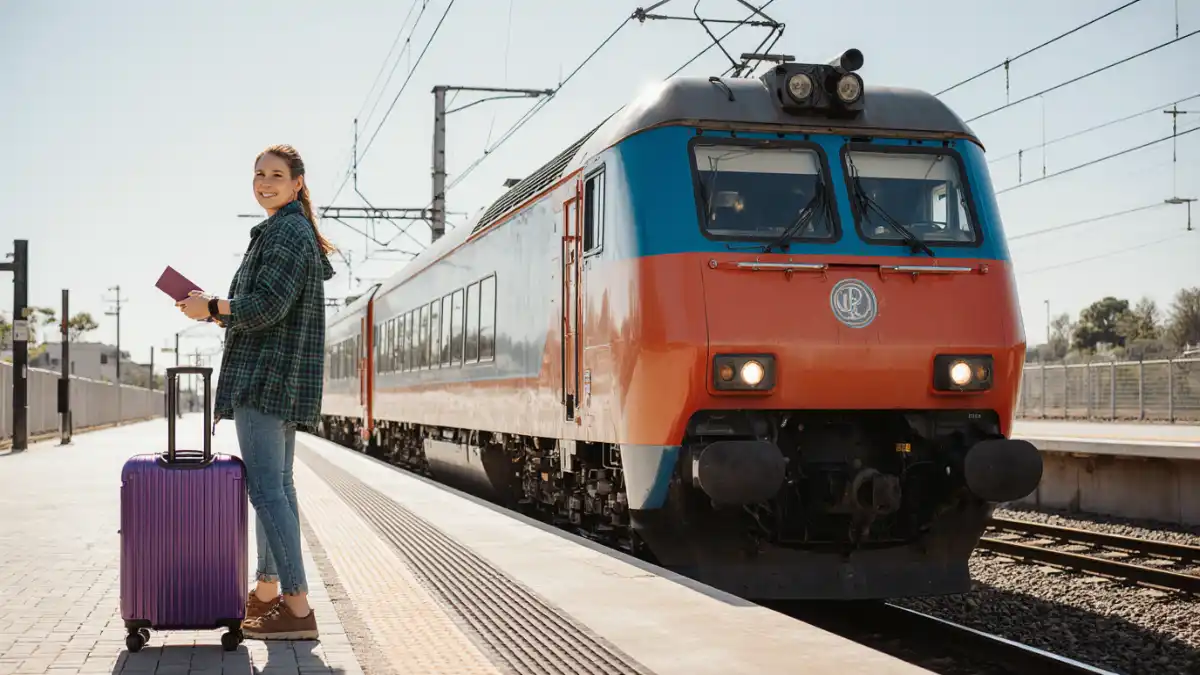
Millions of people cross through European train stations every single day but for many travelers, they’re the most confusing part of the trip. Ever found yourself staring at a departure board that makes no sense, or hauling your luggage up the wrong escalator? You’re not alone.
The truth is, European train stations aren’t as intimidating as they seem once you know how they work. A little local know-how saves you time, stress, and those frantic dashes to the wrong platform.
This quick guide gives you exactly what you need: how to read departure boards, spot local signage quirks, find your platform fast, and move through any European train station like you’ve done it a hundred times before.
Table of Contents
Why It Pays to Master European Train Station Layouts
Big European train stations can feel like mini citie and if you don’t know where you’re going, you’ll lose precious minutes (or your train). A little planning goes a long way.
Here’s what can trip you up:
- Multiple concourses: Some areas handle regional trains; others are reserved for high-speed or international routes.
- Hidden levels: Platforms might be underground, upstairs, or even across a busy street.
- Separate exits: Pick the wrong one and you could face a long, sweaty walk back luggage in tow.
Quick real-world example:
At Frankfurt Hauptbahnhof, it’s easy to arrive on an underground S-Bahn platform but have to catch your next long-distance train from the main hall above. If you know the layout in advance, you’ll switch lines smoothly no panic, no mad dash.
✅ Tip: Download station maps before you go. It’s one of the simplest ways to make European train stations feel familiar before you even set foot inside.ebsites publish printable maps worth downloading before your trip so you can move with confidence.
Understanding Departure Boards
For many first-time travelers, departure boards are the trickiest part of European train stations. One missed detail and you could be standing on the wrong platform as your train pulls away.
So, how do you read them like a pro?
✅ What you’ll see on most boards (digital or classic flip-style):
- Time: Always shown in 24-hour format.
- Destination: The final stop for that train double-check if your station is just one of the stops along the route.
- Train Type/Number: For example, ICE 512, TGV 8421 match this to your ticket.
- Platform Number: The golden detail! Usually marked Gleis, Voie, or Binario, depending on the country.
- Remarks/Notes: Any delay info, platform changes, or boarding status.
Quick Abbreviation Cheat Sheet
| Country | Track/Platform Word |
|---|---|
| 🇩🇪 Germany | Gleis |
| 🇫🇷 France | Voie / Quai |
| 🇮🇹 Italy | Binario |
| 🇪🇸 Spain | Vía |
| 🇳🇱 Netherlands | Spoor |
Real example:
At Gare de Lyon in Paris, the giant flip-board shows your train’s final destination at the top, then lists key stops underneath. Platform (Voie) numbers are added only when the train is ready to board so keep checking up to the last minute.
✅ Tip: Always match your train number not just the destination to be sure you’re on the right one.
Finding Your Platform Quickly
Big or small, European train stations can be confusing when time is tight. Knowing how to move fast can make all the difference.
Following Platform Signs and Arrows
Most European train stations use clear signs with arrows pointing you to platform numbers but they’re easy to miss when you’re rushing.
Keep an eye out for local words:
- Gleis (Germany)
- Voie / Quai (France)
- Binario (Italy)
- Spoor (Netherlands)
✅ Tip: Some signs even show walking distances, like “Gleis 20: 5 min walk.” That five minutes feels longer when you’re dragging a suitcase through a crowd!
Tips for Multi-Level Stations (e.g., Frankfurt Hbf)
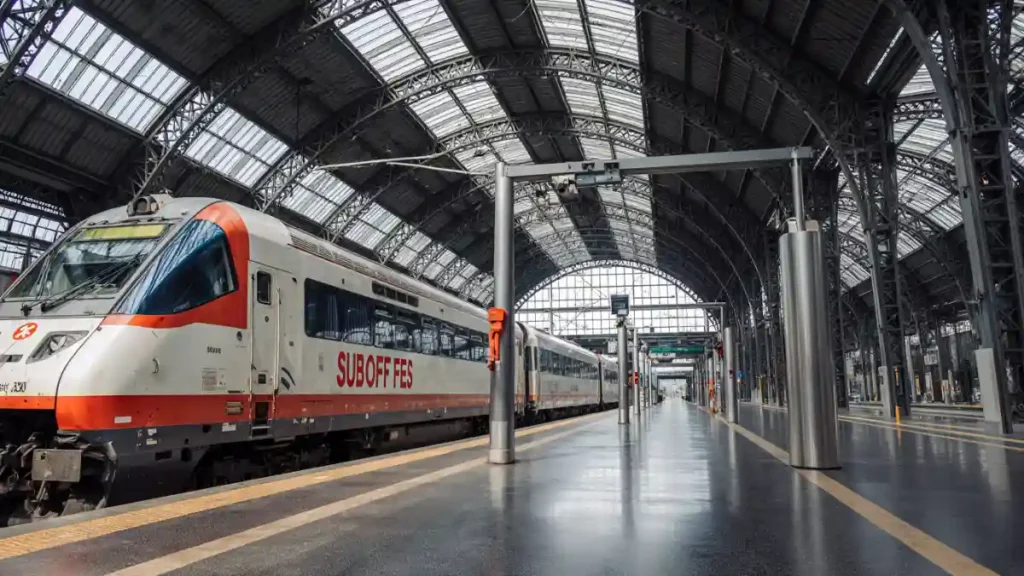
Some big European train stations, like Frankfurt Hauptbahnhof or Milano Centrale, are stacked across different floors:
- Upper levels: Long-distance or high-speed trains.
- Lower levels: Local or regional lines (like Germany’s S-Bahn).
- Escalators and lifts: Useful, but can be crowded build in a few extra minutes if you have a tight connection.
✅ Quick example:
At Frankfurt Hbf, ICE trains depart from the main hall upstairs. S-Bahn trains run from platforms below ground. If you already know this, you won’t waste precious time hauling bags up and down at the last minute.
Using Apps for Live Platform Info
Don’t just rely on physical boards real-time train apps can help you:
- Check live platform changes before you arrive.
- Get alerts for delays or last-minute switches.
Popular apps:
- DB Navigator (Germany)
- SNCF Connect (France)
- Trenitalia (Italy)
- NS (Netherlands)
Example: Milano Centrale’s Platform Layout and Hall Setup
Milano Centrale is a great example of a big, multi-level station:
- 24 tracks, mostly on the same upper level, but stairs/escalators connect them to ticket halls, shops, and metro lines below.
- Clear signs with binary numbers, but crowds can make it confusing; check platform screens as you go.
✅ To Do: If you’re tight on time, locate your platform number as soon as you arrive and head straight there to buy snacks or coffee after you know exactly where to board.
Using Luggage Lockers and Storage
One of the best parts of traveling through European train stations is the option to stash your bags while you explore. But not every station does it the same way so a little know-how helps.
Where Lockers Are Usually Located
Not every station has lockers, but bigger European train stations almost always do and they’re usually easy to find once you know where to look.
🔑 Major Hubs:
- Large stations like Amsterdam Centraal, Munich Hbf, or London St Pancras often have entire locker halls close to the main concourse or near side exits.
- Many offer a mix: small coin-operated lockers for backpacks and staffed luggage counters for oversized bags or suitcases.
🔑 Smaller Stations:
- Many rural or small-town stations don’t have lockers at all always check ahead online.
- If they do, it’s usually a single row of coin lockers near the entrance.
Safety Tips for Using Lockers
- Choose lockers in well-lit, CCTV-monitored areas.
- Don’t store valuables, just bulky items.
- Keep a photo of your locker number and key/receipt in case you forget.
Time Limits:
Most stations set a maximum storage time; 24 to 72 hours is common. After that, your items may be moved to lost property.
Example: Amsterdam Centraal Locker Map
Amsterdam Centraal has:
- 1,000+ coin-operated lockers in a designated hall.
- Clear signs: “Bagagekluizen” = “luggage lockers” in Dutch.
- Open 24/7, but busy in peak season arrive early if you need one.
✅ Tip: Take a photo of the station’s locker map or save it on your phone so you know where to return.
Bathrooms and Showers
When nature calls mid-journey, knowing what to expect in European train stations can save you time (and a frantic search!). Facilities vary a lot by country and station size.
Finding Restrooms in Large vs. Small Stations
🚻 Large Hubs:
Most major European train stations, like Munich Hbf, London St Pancras, or Paris Gare du Nord, have well-marked restrooms near the main concourse, food courts, or ticket halls. Look for signs that say WC or local words:
- Toilettes (France)
- Toilette (Italy)
- Toilet (Germany/Netherlands)
🏘️ Smaller Stations:
In small-town or rural stops, you might find just one basic restroom sometimes on a different floor or even inside a nearby café. A few tiny stations might not have any public toilets at all, so plan ahead if you have a longer wait.
Cost to Use Toilets
Unlike at home, restrooms in European train stations usually aren’t free. Expect a small fee and coins often work best.
| Country | Typical Cost (EUR) | Notes |
|---|---|---|
| 🇩🇪 Germany | €1–€1.50 | Usually coin-operated gates. |
| 🇮🇹 Italy | €0.70–€1.00 | Larger stations only. |
| 🇳🇱 Netherlands | €0.70–€1.00 | Common in big city stations. |
| 🇫🇷 France | €0.50–€1.00 | Often staffed with attendants. |
✅ Tip: Always carry some small change contactless payment isn’t always accepted.
Shower Facilities in Bigger Stations
Need to freshen up before your next leg? Some large European train stations have paid showers handy if you’re waiting overnight or after a long day of connections.
🚿 Example: Munich Hbf
- Public showers are near the locker area.
- Small fee (€5–€7) usually includes a towel and soap.
- Men’s and women’s showers are separate.
✅ Tip: If your station doesn’t have showers, check nearby hotels. Many offer day-use rooms for a quick refresh.
Food Courts and Essentials
No one wants to board a train hangry. The good news? European train stations usually make it easy to grab what you need if you know where to look.
Where to Find Quick Snacks vs. Sit-Down Spots
🥐 Quick Snacks:
- Bakeries, cafés, and sandwich counters are often right by the main concourse.
- Convenience stores sell bottled drinks, pastries, and coffee to go.
🍽️ Sit-Down Spots:
- Larger stations have full-service restaurants, diners, or bars if you have time for a proper meal before boarding.
Using Station Maps to Locate Supermarkets & Pharmacies
Some big European train stations have mini-supermarkets (like REWE to Go in Germany) and chain pharmacies for last-minute essentials. Signs are usually near the main entrance or check the station’s website for a map in advance.
Example: London St Pancras Food Court Layout
London St Pancras International is a great example:
- Dozens of options, from fast food to artisan bakeries.
- Marks & Spencer Simply Food for snacks and bottled drinks.
- Sit-down restaurants upstairs if you have time before boarding the Eurostar.
✅ Tip: Stock up on snacks for long trips dining cars can run out or close early.
Accessibility Tips
Many major European train stations have come a long way in making travel easier for everyone but each country’s setup has its quirks.
Elevators, Ramps, and Dedicated Pathways
- Larger hubs almost always have lifts and ramps for wheelchair users.
- Tactile paving (textured strips on the ground) helps visually impaired travelers navigate safely.
- Some stations let you pre-book staff assistance always check the station website in advance.
Example: Paris Gare du Nord Accessible Exits
Paris Gare du Nord shows how accessibility is done right:
- Elevators connect street level to every platform.
- Entrances and exits are clearly marked Entrée Accessible.
- There are designated meeting points if you’ve arranged for staff help.
✅ Tip: Always allow a bit of extra time lifts can be busy during peak hours, especially in older stations with fewer elevators.
Understanding Signage Quirks by Country
Signage isn’t always obvious a few local words can make a huge difference.
🇫🇷 France – Voie vs. Quai
- Voie = Track number.
- Quai = Platform area. You’ll see both!
🇩🇪 Germany – Gleis, Fernbahnhof, S-Bahn
- Gleis = Track.
- Fernbahnhof = Long-distance train hall.
- S-Bahn = Local/regional trains.
- U-Bahn = Subway/metro.
🇮🇹 Italy – Binario, Uscita, Servizi
- Binario = Track/platform.
- Uscita = Exit.
- Servizi = Restrooms.
🇪🇸 Spain – Vía, Andén, Salida
- Vía = Track.
- Andén = Platform.
- Salida = Exit.
🇨🇭🇦🇹 Switzerland & Austria – Gleis, Perron
- Swiss German uses Perron for platform.
🇳🇱 Netherlands – Spoor, Uitgang, Bagagekluis
- Spoor = Track.
- Uitgang = Exit.
- Bagagekluis = Luggage locker.
🇩🇰🇸🇪🇳🇴 Scandinavia
- Spor (DK), Spår (SE) = Track.
- Utgang/Utgång/Utgang = Exit.
✅ Local Language Basics:
Keep a quick cheat sheet in your phone for track, platform, exit, and toilets!
Safety Tips Inside Stations
Even the safest European train stations have spots where you should stay alert.
How to Keep Bags Secure
- Always keep your bag zipped and in front of you.
- Use lockers or keep your luggage between your legs if seated.
Common Pickpocket Spots
- Escalators, ticket machines, crowded platforms stay aware of your pockets.
Staying Alert Overnight
- If you’re waiting overnight, stay near open cafés or well-lit areas.
- Keep valuables close, and avoid sleeping alone in empty waiting rooms.
Major Hubs vs. Small Stations: What’s Different?
Not all European train stations are giant travel hubs rural stops are simpler, but you trade convenience for charm.
| Feature | Major Hubs | Small Stations |
|---|---|---|
| Layout | Multi-level, concourses, shops | One platform, maybe a small shelter |
| Amenities | Lockers, restaurants, restrooms | Often none check in advance |
| Signage/Info | Multi-language signs | Local language only |
| Staff Presence | Staffed 24/7 | Sometimes unstaffed |
Example:
Zürich HB (Switzerland’s busiest station) has dozens of tracks, shopping arcades, and multiple exits while a rural Swiss village station may be a single platform with a small bench.
Final Quick Tips & Resources
Before you head out:
✅ Download official station maps ahead of time they’re a lifesaver for big hubs.
✅ Watch YouTube walk-throughs of major stations to get familiar.
✅ Use trusted resources like TravelTomato.com or national rail websites for real-time updates.
And if you’re still planning tickets or rail passes, don’t miss our complete Europe Rail Travel Planning Guide it’ll help you piece everything together for a stress-free trip.
